Overflowing Gutters in Heavy Rain: What's Really Causing It
Quick Answer:
Gutters overflow in heavy rain for one of five reasons: the channel is packed with debris, the downspout is blocked somewhere you can't see, the run was never pitched correctly, the system is undersized for the roof feeding it, or water is overshooting the gutter entirely at a roof valley. Where the water spills tells you which one you're dealing with. A sheet of water pouring over the entire front edge points to a clog or an undersized system. Water shooting out at one corner while the rest of the run stays dry points to a blocked downspout. Standing water that's still sitting there a day after the storm passes points to a pitch problem, not a clog at all.
What You're Actually Watching Happen
During a hard Lowcountry downpour, a gutter that's working correctly is nearly invisible. Water lands on the roof, sheets down the slope, drops into the channel, and disappears down the downspout without ever showing itself along the front edge. The moment you can see water spilling over that edge, something in the chain has failed to keep pace with what the roof is sending it.
That failure point matters more than most homeowners realize. A gutter overflowing along its entire length behaves differently than one dumping water at a single corner, and a gutter that's still full an hour after the rain stops is telling you something neither of those first two scenarios would. Treating every overflow as "the gutters need cleaning" is how people end up paying for a cleaning that doesn't fix anything, because the debris was never the actual problem.
Debris Is the Most Common Cause, and the Easiest to Misdiagnose
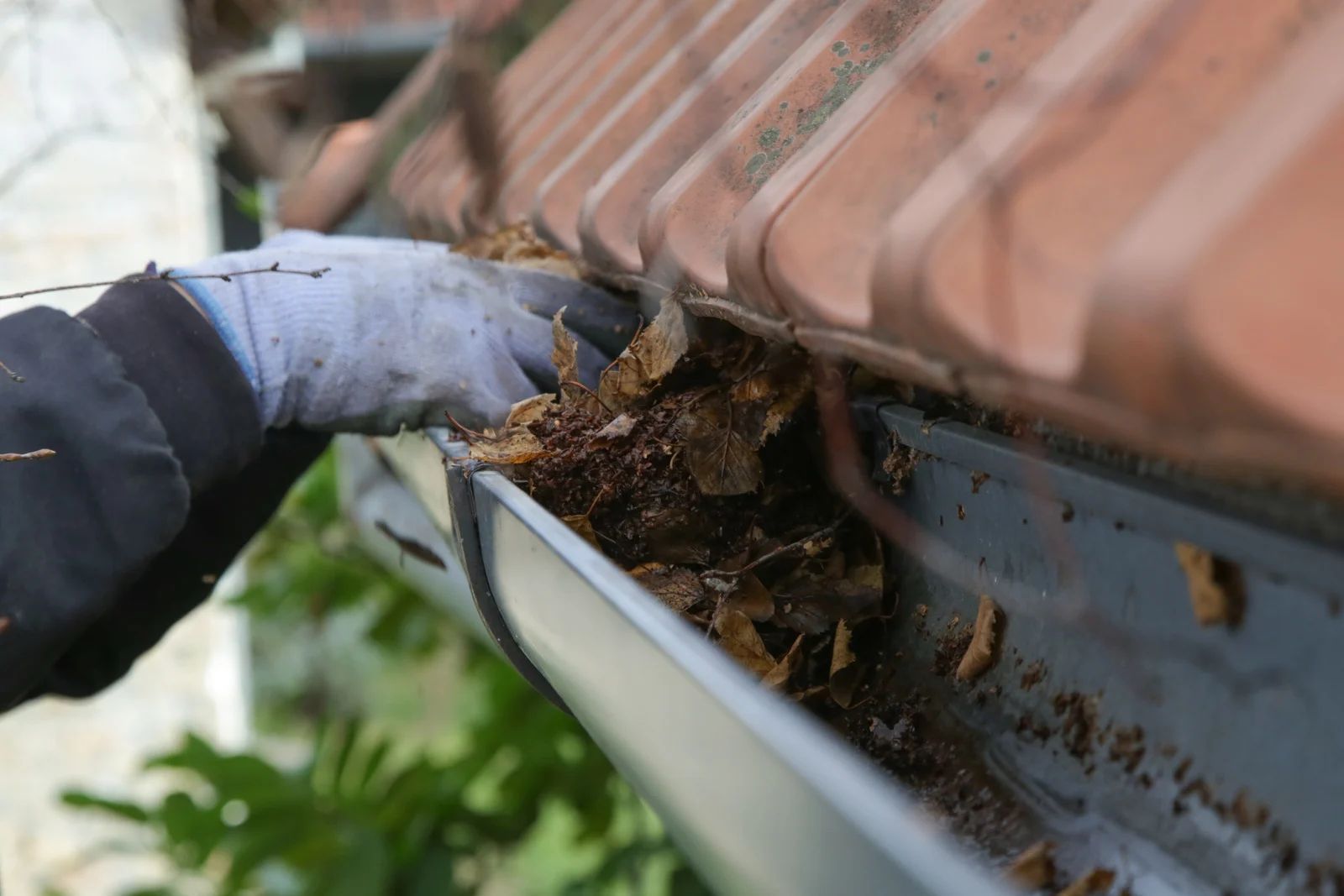
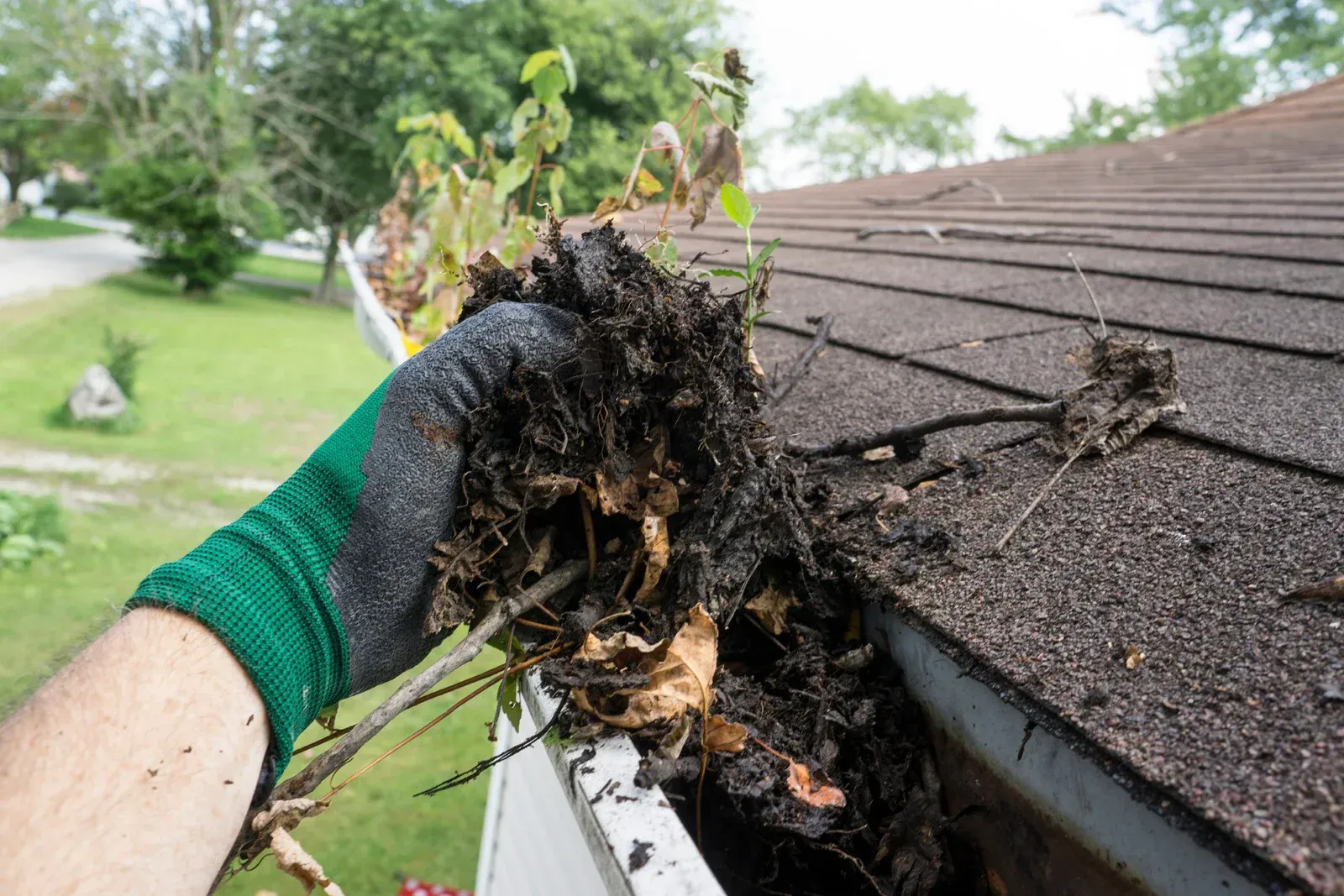
Pine needles and live oak leaves are the two biggest offenders in this part of the state. Pine needles slip through gutter guards that would stop broader leaves, then mat together into a dense layer that water has to fight its way through. Live oaks drop leaves nearly year-round rather than in one autumn dump, so a gutter that was clear in March can be half full again by June without a single hard freeze or leaf-drop season to blame it on. Add in seed pods, moss, and the fine grit that washes off asphalt shingles over time, and a channel can lose most of its working depth without ever looking obviously clogged from the ground.
TIP: Stand at a downspout outlet during a light-to-moderate rain and watch what comes out. A strong, steady stream means the system is flowing. A trickle, a sputter, or nothing at all while the gutter above is visibly filling tells you the blockage is inside the downspout itself, not up in the gutter where you'd normally look first.
The debris explanation is popular because it's the one people can picture, but it's also the one that gets blamed by default even when the real cause is something else. A gutter that's actually clean and still overflowing needs a different diagnosis, and pushing another cleaning at it just delays finding the actual problem.
When the Gutters Are Clean and Still Overflowing
This is the scenario that frustrates homeowners the most, because it looks like the obvious fix should have worked and didn't. Three separate issues tend to produce this exact symptom.
The System Was Never Sized for This Roof
A gutter channel and its downspouts have a fixed capacity, and that capacity has to match the square footage of roof draining into it. A long, steep roof plane pushes far more water into a run than a smaller, shallower one does, and if the original installation used a standard-size gutter and a single downspout regardless of that math, the system will keep pace with light-to-moderate rain and fail every time a hard storm hits. The trade rule of thumb is roughly one downspout for every 30 to 40 feet of gutter run on a typical roof, with wider spacing needed as roof size and pitch increase. A run that's short one downspout, or feeding an oversized roof section into a downspout that was adequate for something smaller, will overflow in exactly the conditions you'd expect: only during the heaviest part of a storm, never during routine rain.
The Pitch Is Wrong
A gutter isn't a level trough. It's built with a slight, continuous slope along its length so gravity keeps water moving toward the downspout instead of sitting still. Trade practice generally targets somewhere around a quarter-inch of drop for every ten feet of run, though the acceptable range varies a bit by installer and gutter profile. When a section loses that slope, whether from a poor original hang, a hanger pulling loose, or fascia board that's shifted over time, water backs up behind the low spot and spills over the front edge right at that point, even in gutters that are otherwise spotless. The giveaway here is standing water. If you can see water sitting in the channel well after a storm has passed and the ground has dried out elsewhere, that section isn't draining, and no amount of cleaning is going to fix a slope problem.
A Downspout Is Blocked Where You Can't See It
Downspouts have bends, transitions, and often an underground extension carrying water away from the foundation. Any of those points can trap wet debris, and a clog thirty feet underground looks identical from the surface to a system that's simply too small. The way to tell them apart is where the overflow shows up. A blocked downspout produces overflow concentrated at or near that corner while the rest of the run keeps draining normally. An undersized system tends to overflow more evenly, and only once the rain intensity crosses a certain threshold.
Roof Valleys Can Overwhelm a Gutter That Isn't the Problem at All
Not every overflow originates in the gutter. Where two roof planes meet at a valley, rainwater from both slopes concentrates into a single, fast-moving stream that hits the gutter with far more force and volume than the rest of the run ever sees. During a hard storm, that concentrated flow can shoot past the gutter's front edge entirely, landing on the ground, a walkway, or the foundation below without the gutter failing to do its job at all. It simply wasn't built to catch water arriving at that speed and volume in one spot. This is one of the more commonly missed diagnoses, because the visible symptom, water pouring off the roofline, looks identical to a clogged or undersized gutter even though the fix is completely different: a splash guard or a wider catch basin positioned at the valley, not a bigger gutter or a cleaning.
Sagging Sections and Failing Hangers
Coastal salt air and the constant humidity cycle common to the Lowcountry take a toll on gutter fasteners over time, loosening hanger screws and, in older systems, corroding spikes or brackets faster than the same hardware would wear inland. A gutter that's pulling away from the fascia, even slightly, changes its pitch and creates a low point exactly where the sag is worst. That low point fills first, overflows first, and puts more stress on the neighboring hangers as standing water adds weight to a section that's already struggling to hold on.
WARNING: A visibly sagging gutter section isn't a cosmetic issue you can leave for later. Once fasteners start pulling loose, the weight of trapped water accelerates the problem, and a section that's sagging today can be hanging by a few screws within a season, especially heading into hurricane season when wind-driven rain adds lateral stress the system wasn't built to handle. If you can see a dip or a section pulling away from the roofline, get it looked at before the next heavy storm rather than after.
Reading the Pattern Before You Call Anyone
The location and timing of an overflow is a diagnostic tool, not just a nuisance. Overflow along the entire length of a run, appearing only once the rain gets truly heavy, usually points to a capacity problem: too few downspouts or a gutter sized for a smaller roof than the one it's draining. Overflow concentrated at one corner or section while the rest of the run stays dry points to a localized blockage in that downspout. Water still sitting in the channel well after the storm has passed and everything else has dried out points to a pitch problem, not a clog. And water shooting past the gutter entirely at a spot where two roof planes meet points to a valley overshoot issue that a cleaning will never solve.
Getting the diagnosis right the first time saves you from paying for a fix that addresses the wrong problem. A cleaning won't correct bad pitch. A new downspout won't fix a roof valley overshooting the gutter beside it. Matching the fix to what the water is actually telling you is the difference between a problem that's solved and one that comes back with the next hard rain.
Frequently Asked Questions
Is it normal for gutters to overflow during intense storms?
Brief overflow during the most extreme minutes of an unusually heavy storm can happen, even with properly maintained gutters. However, frequent overflow during ordinary rain, every storm, or after rainfall indicates an underlying problem.
How can I tell a clog from an undersized system?
A clog usually causes overflow near one specific section or downspout and may appear during lighter rain. An undersized system typically overflows across a longer run when rainfall becomes particularly heavy or intense.
Do gutter guards prevent gutter overflow?
Gutter guards can reduce debris buildup and clog-related overflow, but they cannot correct poor pitch, undersized gutters, or roof-valley overshoot. A properly guarded gutter can still overflow when its capacity or design is inadequate.
Why is gutter overflow worse than it used to be?
Gutter systems can develop problems gradually as hangers loosen, fascia changes, or roof surfaces age. A system that once handled heavy rain may eventually develop drainage or attachment issues that become obvious during storms.
Should I worry about overflow near the foundation?
Yes. Overflow near the foundation can repeatedly saturate the soil, cause erosion, and contribute to drainage concerns. Pooling or concentrated water against the house should receive attention sooner than overflow occurring farther from the foundation.
Understanding What Heavy Rain Reveals About Gutters
A properly functioning gutter system should move rainwater away from the roof without spilling over the front edge. When overflow happens, the pattern usually reveals what has gone wrong. A clogged gutter, blocked downspout, poor pitch, inadequate capacity, or roof-valley overshoot can each create a different symptom. In Beaufort and the South Carolina Lowcountry, where heavy rain and humidity are common, understanding that pattern helps homeowners distinguish routine debris buildup from a problem with the gutter system itself.
For homeowners in Beaufort, South Carolina Gutters
brings more than 6
+ years of experience to understanding how local weather conditions affect residential gutter systems. Persistent overflow should not automatically be treated as a cleaning issue. Looking at where the water spills, how quickly it happens, and whether water remains in the channel after the storm can point toward the actual cause and help prevent the same problem from returning during the next heavy rainfall.