The Hidden Risks of Climbing a Ladder to Clean Your Own Gutters
Quick Answer: Most ladder falls during gutter cleaning trace back to one of three things: the ladder wasn't set on solid, level ground, the person on it reached sideways past the rails instead of climbing down to move the ladder, or a handful of wet debris shifted their balance at the wrong moment. National emergency room data puts ladder-related injuries at well over 100,000 a year, and the large majority happen at home rather than on a job site. A study built specifically to mimic gutter cleaning found that roughly four in ten people reached far enough during the task to risk tipping the ladder at least once. None of that means gutters can't be cleaned safely on your own. It means the danger is specific and mostly comes down to setup and how you move once you're up there, not bad luck.
Saturday morning, ladder leaned against the fascia, a bucket hooked over one rung and both hands full of wet leaves. That's the moment most gutter falls actually happen, not during some dramatic slip but in the middle of an ordinary reach nobody thought twice about. You've probably done this exact climb a dozen times without incident, which is part of the problem. Nothing about the last nine gutter cleanings tells you anything about how the tenth one goes.
The job looks simple from the ground. Get up there, scoop out the leaves, move the ladder, repeat. What that description leaves out is everything that actually causes injuries: how the ladder's feet behave on ground that isn't quite level, what happens to your balance the moment you lean past the rail instead of climbing down, and how differently a ladder handles once the rungs and your gloves are both wet. None of this is complicated. It's just the part of the job that doesn't show up until you're already up there.
What Actually Happens in the Half-Second Before a Fall
A ladder doesn't usually fail all at once. It tips, slides, or kicks out from underneath, and each of those has a specific cause that's worth understanding before you're standing on the third rung.
Sideways Tipping Is The Most Common Failure During Gutter Work
A straight or extension ladder remains stable only within a narrow footprint. Reaching too far sideways shifts your weight beyond that footprint, causing the ladder to rotate around its feet.
Base Slide Happens When The Feet Lose Their Grip
Loose gravel, damp pavers, or shifted mulch can let ladder feet slide outward when weight settles unevenly. Often, unstable ground gives way before the ladder itself fails.
Rung Slip Is The Quiet One
Wet aluminum rungs combined with wet boot soles create a serious slipping hazard. Even light morning moisture can reduce traction enough for your foot to slide unexpectedly.
Each of these failure modes traces back to something you can control before you ever step on the first rung. That's the part worth taking seriously.
Why Wet Gutters Change the Math
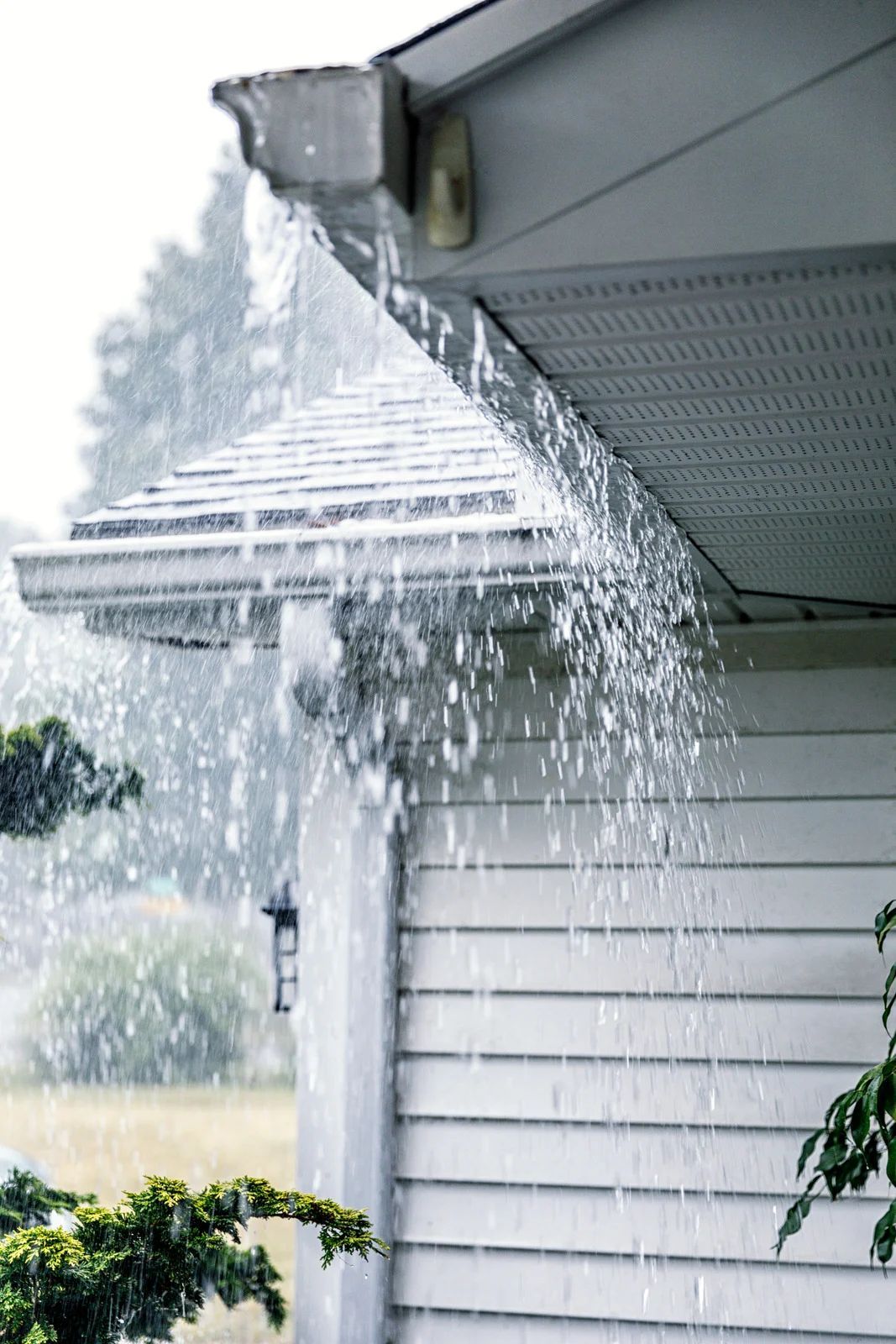
Dry debris cleaning is one job. Wet debris cleaning is a different one, and the Lowcountry hands you wet debris more often than not. Between the humidity, the length of the rainy season, and the storms that roll through from late summer into fall, gutters here rarely get cleaned bone-dry.
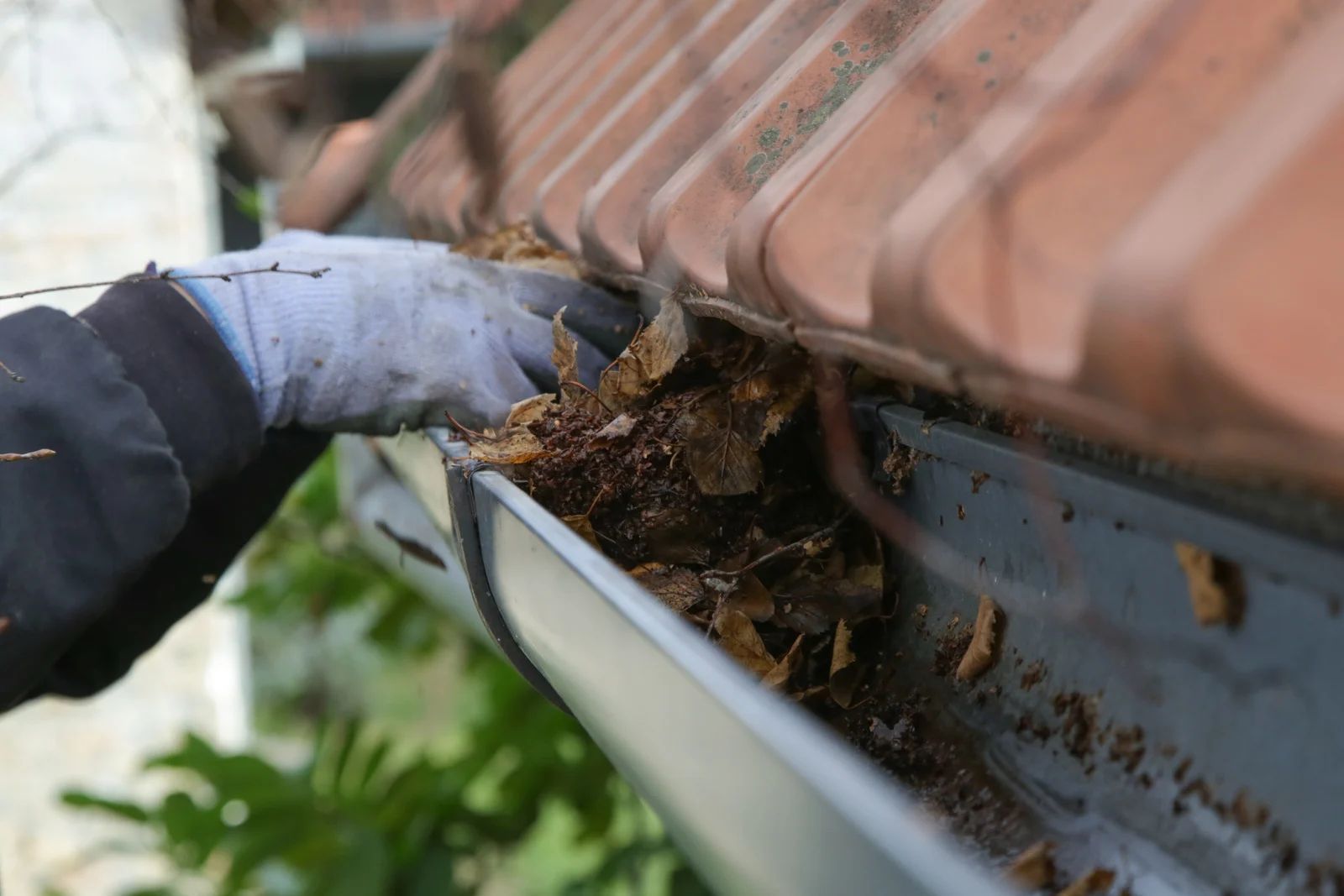
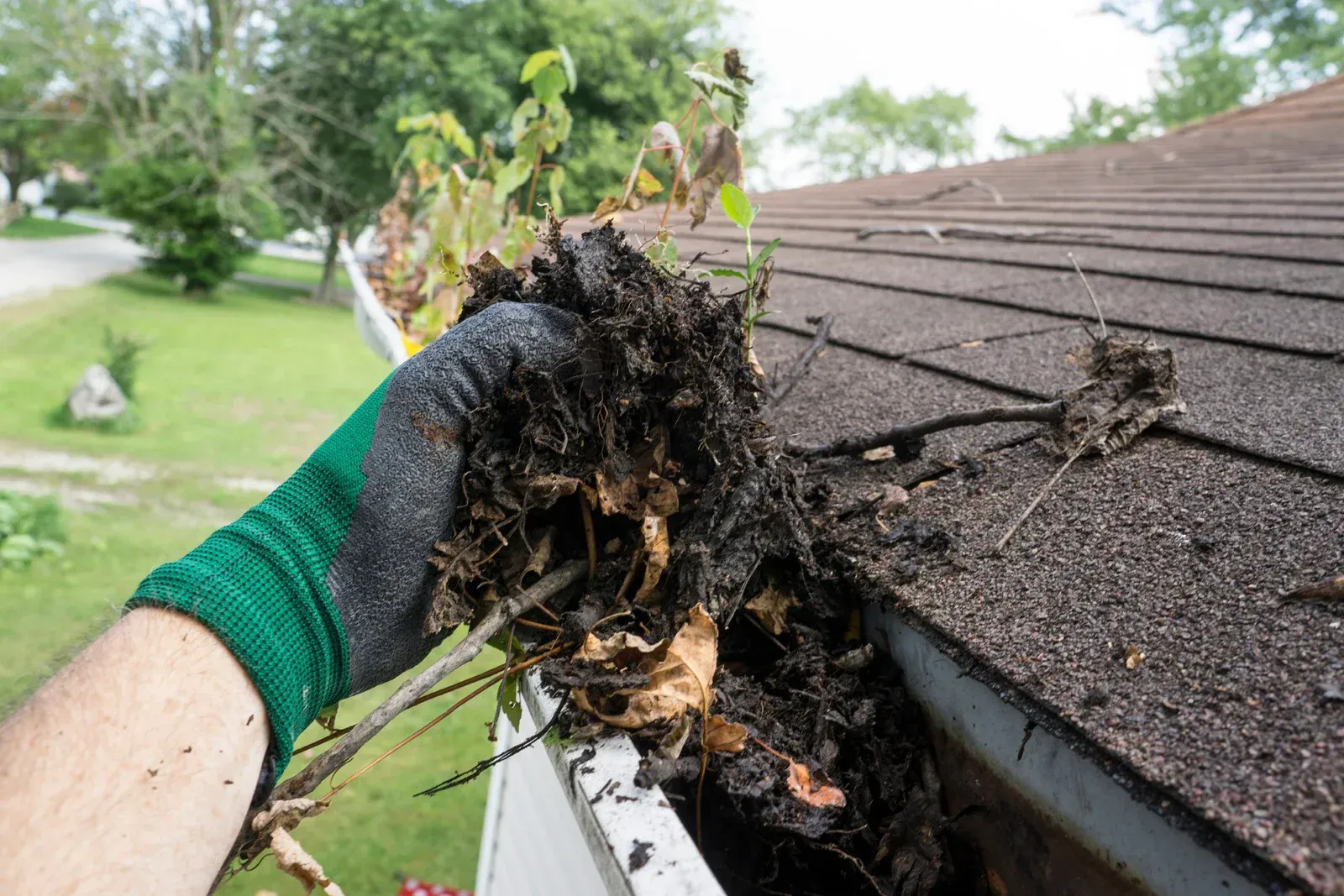
Wet leaves and pine needles are heavier, they clump instead of falling loose, and they cling to your gloves in a way that changes your grip the second you go to shift your weight. A gutter full of standing water from a recent downpour adds weight you don't expect when you first dig in. And it isn't just the debris. Algae and pollen film on painted fascia boards and gutter lips gets slick fast in the humidity common to this part of the state, so the very surfaces you're bracing a hand or a foot against aren't as trustworthy as they look.
There's a behavioral piece here too, and it's not obvious until you see the research. A study that had people clear a simulated gutter on an instrumented ladder found that leftover debris on one side made people reach farther for it than they would for debris on a side that was already clear. In plain terms: the last few clumps of wet leaves are exactly the ones most likely to pull you into a reach you shouldn't be making, because finishing the job feels closer than moving the ladder does.
TIP: Before you climb, walk the length of the run and knock loose any obviously heavy, waterlogged clumps with a rake or a long tool from the ground. Going up with less weight already loosened means fewer reaches, fewer climbs, and less temptation to stretch for one last handful instead of repositioning the ladder.
Uneven Ground Does More Damage Than People Think
Most homeowners check that a ladder feels steady once they're on it. Fewer check what it's actually standing on, and that's backwards. By the time you can feel instability from the third rung, the ground has already made the decision for you.
The ground right along a foundation is some of the least reliable footing on the whole property. Flower beds, mulch rings, downspout splash zones, and the soft, settled soil near a foundation wall are all common right where a ladder needs to go for gutter work. After a hard rain, and Lowcountry storms deliver plenty of those, that strip of ground can stay soft and uneven for days even when the rest of the yard has dried out. A ladder foot that looks planted can still sink half an inch into softened soil over the course of a climb, which is more than enough to throw off the angle you started with.
Concrete walkways and patios aren't automatically safer. A slight slope toward a drain, a raised paver edge, or a puddle from a recent storm can all put one ladder foot slightly higher than the other, and a ladder that's even a little unlevel side to side loses stability in a direction most people never think to check. Most homeowners plant the ladder, give it a shake front to back, and call it good. Side-to-side stability rarely gets tested at all.
Setting Up Square: The Difference Between a Stable Ladder and a Loose One
Getting the base right does more to prevent a fall than almost anything you do once you're climbing. Two things matter most here.
The Angle Needs To Be Close To Right, Not Approximate
The standard extension ladder setup uses a 4-to-1 ratio: every four feet of ladder height requires the base to sit one foot from the wall. This creates roughly a 75-degree angle, reducing backward tipping or dangerous base slippage during climbing and work.
Three Points Of Contact Isn't Optional, Even For A Quick Job
Maintain three points of contact whenever climbing: two hands and one foot, or two feet and one hand. Reaching for a bucket, moving debris, or freeing another hand immediately reduces stability. A wet clump, shifting foot, or unexpected movement can quickly turn a minor task dangerous.
Extension Height Matters Too
The ladder should extend at least three feet above the stepping-off point or work area. That extra height provides a secure handhold and prevents you from standing on the highest rungs, where stability decreases significantly. Repositioning the ladder is safer than stretching upward from an unstable position.
The Reach That Feels Fine Until It Isn't
Overreaching gets talked about as if it's careless behavior, something only an inattentive person would do. The research says otherwise. In the lab study on gutter clearing mentioned earlier, overreaching wasn't rare or limited to a careless few. It showed up in roughly 40 percent of participants at least once during a task that was, by design, a lot shorter and less demanding than a real gutter run around an entire house. And this wasn't a fringe behavior tucked into the data. Older research on ladder falls in general has linked overreaching to the large majority of falls that happen while someone is standing on a ladder, and to more than a third of the cases that end up in an emergency room specifically because of a ladder incident.
Part of what makes overreaching so easy to fall into is that it doesn't feel risky in the moment. Your center of gravity shifts gradually as you lean, not all at once, so there's no clear signal telling you you've crossed a line until the ladder is already tipping. The rule of thumb worth remembering is simple: if you have to lean your belt buckle past the ladder's siderail to reach something, you've gone too far. Climb down, move the ladder, and go back up. It costs you a couple of extra minutes. The alternative costs a lot more.
WARNING: Never climb a ladder to clean gutters alone during or immediately after a storm, and never during high wind. Wet debris, saturated soil at the base, and gusts that catch a ladder or an open gutter scoop are a combination that turns a routine task into a serious fall risk fast. If the roofline is still dripping or the wind is kicking up leaves on the ground, wait it out.
What a Second Story Adds to the Equation
Height changes the math in ways that aren't purely about how far you'd fall. A taller extension ladder flexes more, sways more in a breeze, and takes a longer, heavier reach to set up correctly against a second-story fascia line. Your margin for error at 20 feet is nowhere near the margin you had at 10.
It also changes what a slip actually costs you. A short fall from a single-story gutter line is often a bad scrape and a bruised ego. A fall from a second-story roofline is a different category of injury entirely, and the data on ladder falls backs that up: injuries serious enough to require hospitalization or a transfer to another facility happen at roughly double the rate you'd see across consumer product injuries in general. Homes with steep or complex rooflines, common throughout the older neighborhoods around Beaufort and the surrounding islands, add another layer, since a ladder rarely sits square against a roofline that isn't a simple, flat wall.
Frequently Asked Questions
Is it actually dangerous to clean my own gutters, or is that overstated?
The risk is real but specific. It isn't the gutters that cause injuries, it's ladder setup and overreaching. Most ladder-related emergency room visits happen at home, not on job sites.
What's the single biggest mistake people make when cleaning gutters themselves?
Reaching sideways instead of climbing down to move the ladder. Chasing after one more clump of leaves feels easier than repositioning, but that exact reach causes most overreaching-related ladder falls.
Does it matter what kind of ladder I use?
Yes. A ladder that's too short forces you onto the least stable top rungs. One that's too long is harder to angle and heavier to reposition, so it moves less.
Is it safer to clean gutters on a dry day versus right after rain?
Considerably. Wet debris is heavier and clumps instead of releasing cleanly, wet rungs and gloves reduce your grip, and the ground near the foundation stays soft longer after a storm.
How do I know if my ladder is set at a safe angle without measuring it exactly?
Stand with your toes at the ladder's base and reach straight out. Your hands should land at the rungs. Leaning forward means too far out; bent arms mean too upright.
When does it make more sense to have someone else handle it?
Second-story homes, steep rooflines, gutters that stay wet or shaded, and anyone unsteady or working alone all shrink your margin for error fast. Two or more means it's worth weighing.
A Job That Deserves More Than Guesswork
Every fall in this article traces back to the same handful of decisions, not to bad luck or bad gutters. It starts with ground that looked solid but wasn't, a base angle that was close enough instead of correct, or a reach that stretched past the siderail because climbing down felt unnecessary in the moment. None of those moments feel risky as they're happening, which is exactly why they cause more injuries than storms, height, or old ladders ever do.
South Carolina Gutters
has spent 6
+ years working gutter lines across Beaufort, SC, watching which setups hold and which don't. That experience doesn't change the physics of a ladder against a wet fascia board, but it does change how quickly someone notices soft ground, a bad angle, or a reach that's gone too far. Knowing the warning signs before they turn into a fall is, in the end, most of what separates a routine cleaning from an accident.